

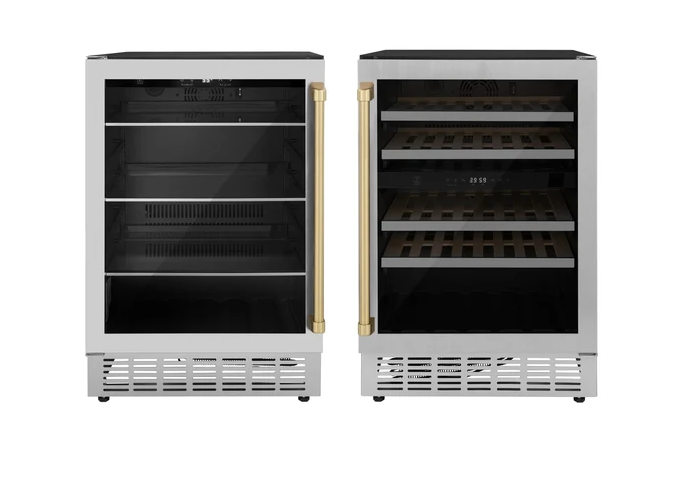
Wine storage can be difficult to integrate into a kitchen when floor space is limited. An under counter wine cooler provides a dedicated storage solution designed to fit beneath a countertop while keeping bottles organized and at a controlled temperature.
Unlike a standard household refrigerator, a wine cooler is designed around the storage requirements of wine. Depending on the model, it may offer specialized bottle racks, adjustable temperature controls, tinted glass, and single- or dual-zone operation.
An under-counter configuration can be especially useful in kitchens, home bars, dining areas, and entertainment spaces because it uses lower cabinet space without requiring a separate freestanding appliance.
However, appearance and bottle capacity should not be the only considerations. Installation requirements, ventilation, temperature range, door clearance, bottle sizes, and energy consumption also need to be evaluated.
Why Choose an Under-Counter Configuration?
The main advantage of an under-counter wine cooler is efficient use of available space. Rather than dedicating an entire section of floor space to a freestanding cooler, homeowners can incorporate wine storage into the lower portion of a kitchen or bar.
This configuration can also provide convenient access. Bottles can be stored close to dining or food-preparation areas without occupying the main refrigerator.
For renovation projects, the appliance can be incorporated into cabinetry alongside dishwashers, beverage appliances, and other built-in equipment.
The installation must be planned carefully, however, because built-in appliances have specific ventilation requirements. A freestanding wine cooler should not automatically be placed inside cabinetry unless the manufacturer explicitly permits that installation.
How Does a Wine Cooler Work?
A wine cooler uses a refrigeration system to maintain a controlled internal temperature. The system removes heat from the interior and releases it elsewhere, which is why adequate ventilation is necessary.
Different models can use different refrigeration technologies. Compressor-based systems are common and can provide reliable cooling across a range of temperatures. Thermoelectric systems are also used in some smaller wine coolers.
The appropriate technology depends on the size of the cooler, desired temperature range, room conditions, and storage requirements.
Temperature stability is particularly important for wine. The goal is generally to avoid excessive heat and repeated temperature fluctuations rather than simply making the storage environment as cold as possible.
What Temperature Should Wine Be Stored At?
Wine does not require the same temperature as food stored in a conventional refrigerator. Storage and serving temperatures also differ.
The appropriate temperature can depend on wine style. Sparkling wines, white wines, rosé wines, and red wines are typically served at different temperatures.
For longer-term storage, maintaining a stable, moderate environment is generally more important than repeatedly adjusting the temperature for individual bottles.
A dual-zone cooler can be useful when a household regularly stores different wine styles that require different serving temperatures.
What Is a Single-Zone Wine Cooler?
A single-zone cooler maintains one temperature throughout its interior. This configuration is relatively straightforward and can work well for people who primarily store one category of wine.
It can also be appropriate for collections where the bottles are stored primarily for preservation rather than immediate serving.
A single-zone under counter wine cooler may offer more usable internal space because the cabinet does not need to be divided into separate temperature compartments.
What Is a Dual-Zone Wine Cooler?
Dual-zone wine coolers have two independently controlled compartments. This allows users to maintain different temperatures for different categories of wine.
For example, a household may store red wines at one temperature and white or sparkling wines at a cooler setting.
The trade-off is that the internal cabinet is divided, which can affect capacity and shelf arrangement.
Before selecting a dual-zone model, consider whether the household actually needs separate temperatures. If most bottles are similar in style, a single-zone appliance may be more practical.
How Much Bottle Capacity Do You Need?
Bottle capacity should be based on the collection you currently have and expect to build.
Manufacturers often state capacity using standard wine bottles, but real-world capacity can vary. Champagne bottles, Burgundy-style bottles, magnums, and other larger formats can require more shelf space.
Shelf spacing is therefore as important as the advertised bottle count. Adjustable or removable shelves can provide greater flexibility for different bottle shapes.
If the cooler will be used alongside a beverage refrigerator, consider whether the two appliances will serve separate purposes. Wine can occupy the dedicated wine cooler while cans, mixers, and other beverages are stored elsewhere.
Why Is Ventilation Important?
An under-counter installation requires careful attention to airflow. Refrigeration systems generate heat and need to release it efficiently.
Many built-in wine coolers are designed with front ventilation so they can operate within cabinetry. Others may require specific clearances.
Improper ventilation can reduce cooling performance and potentially increase energy consumption or shorten equipment life.
Before installation, always review the manufacturer’s specifications for clearance and ventilation. Cabinet dimensions should be designed around those requirements rather than assuming that every appliance fits the same opening.
Does Light Affect Wine?
Light exposure can influence wine quality over time, particularly when bottles are exposed to ultraviolet radiation.
Many wine coolers use tinted or UV-resistant glass doors to reduce exposure. However, the level of protection varies between products.
Placement also matters. Installing the cooler away from direct sunlight can reduce unnecessary heat and light exposure.
A shaded location is generally preferable for dedicated wine storage, particularly when bottles will remain inside the appliance for extended periods.
Why Does Bottle Position Matter?
Many traditional wine-storage systems keep bottles horizontally. This can maintain contact between wine and a natural cork, helping prevent the cork from becoming excessively dry during prolonged storage.
Not all wine uses natural cork. Screw caps and synthetic closures have different characteristics.
Wine coolers often use horizontal shelves because they maximize bottle storage and provide easy access.
For long-term collectors, storage practices should be matched to the type of closure and intended aging period.
Can an Under-Counter Cooler Store Other Beverages?
Some wine coolers are specifically designed for bottles and may have shelving optimized for wine. Others offer more flexible interiors suitable for various drinks.
If the primary goal is to store cans, bottled water, soft drinks, mixers, and beer, a dedicated beverage cooler fridge may be more appropriate.
A wine-focused appliance can be less convenient for cans and irregularly shaped containers because its shelves are generally designed around wine bottles.
Understanding how the appliance will be used is therefore essential before choosing one.
What Is a Wine and Beer Fridge?
A wine and beer fridge is designed to accommodate both wine bottles and beer or other beverages. These appliances can offer more versatile storage than a wine-only cooler.
The trade-off may involve temperature and shelf configuration. Wine and beer can have different ideal serving temperatures, so a single-temperature appliance may require compromise.
Dual-zone configurations can provide greater flexibility when different beverages need different storage conditions.
Consumers should also consider whether the shelving can accommodate both bottles and cans without wasting substantial interior space.
How Does an Under-Counter Cooler Compare With a Beverage Refrigerator?
A beverage refrigerator is generally designed for broader drink storage, including cans and bottles. It may have adjustable shelves that make it suitable for soft drinks, beer, water, mixers, and other beverages.
A wine cooler, by contrast, is typically optimized around bottle storage and wine-related temperature requirements.
The right choice depends on the collection. Someone with a substantial wine collection may benefit from a dedicated wine cooler, while a household that frequently entertains may prefer the versatility of a broader beverage refrigerator.
What Should You Check Before Buying?
Before purchasing an under counter wine cooler, check:
- Actual width, height, and depth
- Ventilation configuration
- Required cabinet clearance
- Door swing
- Bottle capacity
- Shelf design
- Single- or dual-zone temperature control
- Temperature range
- Glass-door construction
- Energy consumption
- Noise level
- Warranty coverage
Also consider delivery and installation access. The appliance needs to reach the intended location without encountering doorways, cabinetry, or other physical restrictions.
Conclusion
An under counter wine cooler can provide dedicated wine storage while making efficient use of lower kitchen or bar cabinetry. Its compact configuration can be particularly useful when floor space is limited and convenient access to wine is important. When comparing a beverage refrigerator or wine and beer fridge, consider what you actually intend to store. A wine-focused appliance generally offers bottle-oriented shelving and temperature management, while a broader beverage cooler can provide greater flexibility for cans and mixed drinks. A beverage cooler fridge may therefore be a better choice for households whose storage needs extend beyond wine. Before purchasing, measure the installation area carefully and confirm ventilation, temperature, electrical, capacity, and clearance requirements. Selecting an appliance according to the drinks you store, the available space, and your preferred serving or storage conditions can help ensure that the cooler remains useful as your collection develops.
