

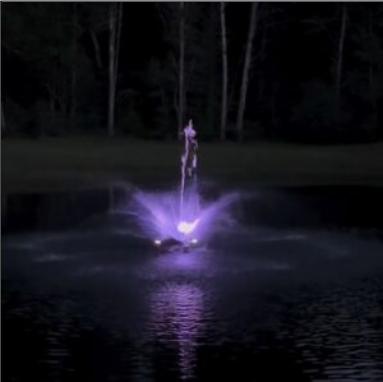
Ponds can become more visually appealing and dynamic when water movement is incorporated into their design. Rather than leaving the surface completely still, a fountain can introduce vertical streams, circulation, and gentle movement that change how the water feature looks throughout the day. Floating fountain systems are particularly useful because they can operate without requiring a permanent structure to be built into the pond floor.
For property owners considering floating fountains for ponds, understanding how these systems work and what features influence their performance can make selection and maintenance easier. Fountain size, pump capacity, spray pattern, water depth, electrical requirements, and lighting are all factors that can affect the overall result.
How Floating Pond Fountains Work
A floating fountains for ponds typically uses a buoyant platform to keep the fountain assembly positioned on the water’s surface. A submersible pump draws water through an intake and pushes it upward through a nozzle, producing a spray pattern above the pond.
Because the fountain floats rather than being permanently mounted to the bottom, installation can be comparatively flexible. The unit can generally be positioned in the desired area and secured with an appropriate anchoring system.
The pump’s capacity and nozzle configuration determine characteristics such as spray height, water volume, and pattern. These specifications should be matched to the size and depth of the pond to achieve the intended appearance without creating excessive turbulence.
Choosing the Right Fountain Size
Pond dimensions are among the most important considerations when selecting a fountain. A fountain designed for a small decorative pond may not provide sufficient coverage in a large lake or retention pond, while an excessively powerful system can create unnecessary splash and disturbance in a smaller body of water.
Water depth also matters because floating fountains require adequate clearance for their intake and operating components. Manufacturers typically provide recommended operating conditions and specifications that should be reviewed before installation.
The desired spray pattern is another consideration. Some nozzles create narrow vertical streams, while others distribute water across a wider area. Choosing the pattern based on the pond’s proportions can help create a more balanced appearance.
The Importance of Water Movement
A floating fountains for ponds does more than create a visual centerpiece. Moving water can increase interaction between the water surface and surrounding air. This is one reason fountains are commonly incorporated into ponds and other managed water features.
Aeration and circulation are related but distinct functions. A fountain can help expose water to air, while circulation moves water within the pond. The actual effect depends on fountain design, pump capacity, pond depth, weather conditions, and other factors.
For ponds where water quality or oxygen levels are a concern, fountain selection should therefore be based on the specific management objective rather than appearance alone.
Adding Lighting to a Pond Fountain
Lighting can significantly change the appearance of a fountain after sunset. Underwater or fountain-mounted fixtures can illuminate water streams and make spray patterns more visible in low-light conditions.
Lighting should also be positioned carefully. Fixtures aimed directly into the viewing area can create glare, while properly angled lights can highlight individual water streams and produce a more defined nighttime display.
Considering Electrical and Safety Requirements
Floating fountains typically require an electrical connection to operate their pumps and, when included, lighting systems. Outdoor electrical equipment must be installed and maintained with appropriate protection against moisture and water exposure.
Installation should follow applicable electrical codes and the manufacturer’s instructions. Ground-fault protection is particularly important around outdoor water features because it can help reduce the risk associated with electrical faults.
Cables should also be routed and secured carefully to prevent damage, unnecessary tension, or interference with people and equipment around the pond. Electrical components should be inspected periodically for signs of wear or deterioration.
Maintenance Requirements for Floating Fountains
Regular maintenance helps keep a fountain operating efficiently. Pumps and intake screens can accumulate leaves, algae, sediment, and other debris, potentially restricting water flow.
The fountain should be inspected according to the manufacturer’s recommended maintenance schedule. Depending on the environment, maintenance may include cleaning the pump intake, checking nozzles for blockages, inspecting electrical connections, and examining flotation components.
Seasonal conditions should also be considered. In areas where ponds freeze, floating fountain systems may need to be removed or winterized according to manufacturer recommendations. Preventing ice-related damage can help extend the service life of the equipment.
Matching Fountain Features to the Pond
Every pond has different requirements, so selecting a fountain should involve more than comparing spray heights. Pond dimensions, water depth, desired visual effect, circulation objectives, available electrical service, and lighting requirements should all be considered together.
A well-matched fountain can provide consistent water movement while complementing the surrounding landscape. Lighting can further extend its visual impact into the evening, allowing the fountain to serve as a feature during both daytime and nighttime.
Conclusion
Floating pond fountains offer a flexible way to introduce movement and visual interest into managed water features. Their performance depends on selecting appropriate pump capacity, nozzle design, fountain size, and installation conditions for the specific pond. Lighting can add another dimension by making water streams visible after dark and emphasizing different spray patterns. When choosing water fountain LED lights, factors such as outdoor durability, electrical safety, brightness, and compatibility should be evaluated alongside the fountain itself. With suitable equipment, proper installation, and routine maintenance, a floating fountain can become a functional and visually engaging part of a pond environment.
