

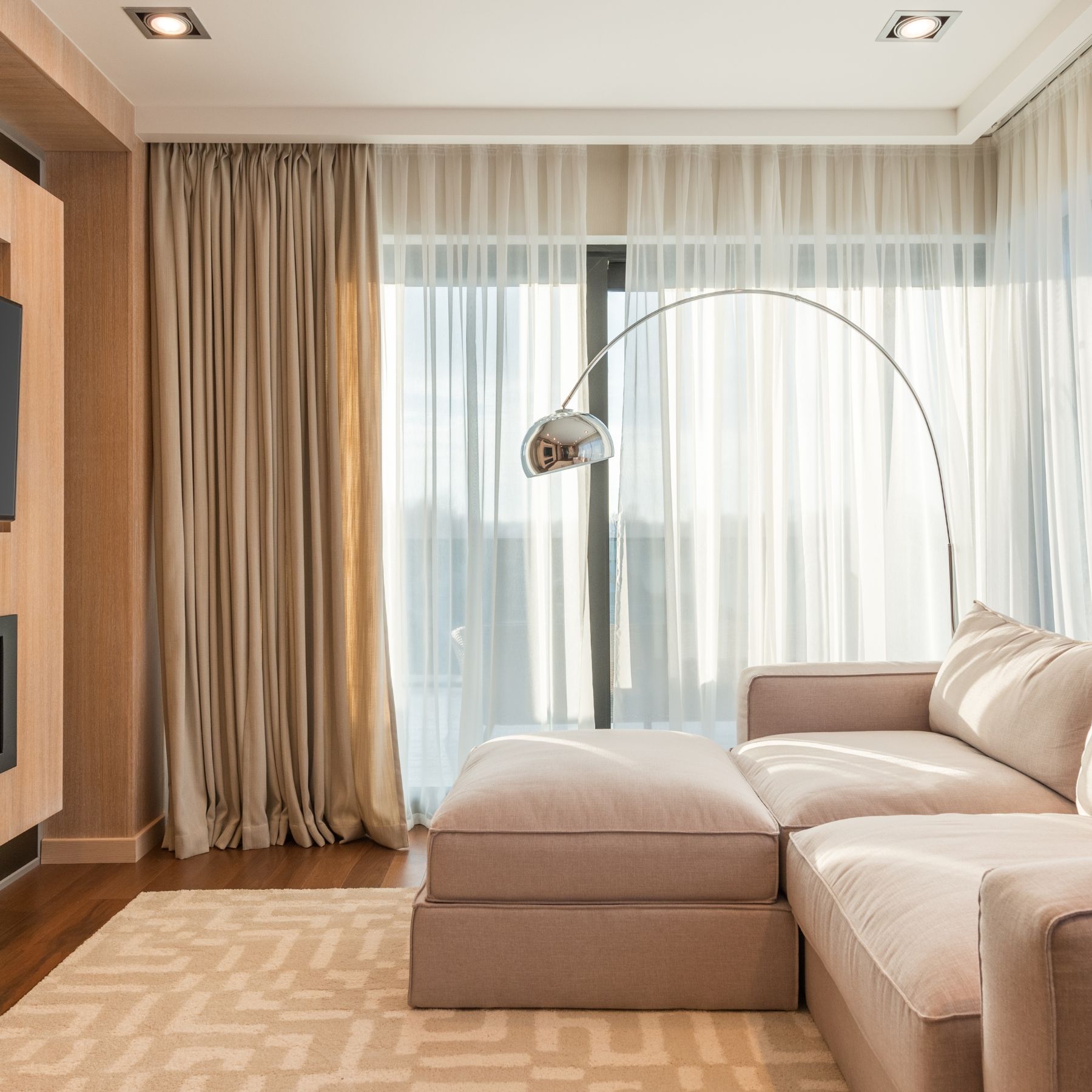
A luxurious living room is rarely about one spectacular piece. It is the layers that create the feeling: beautifully proportioned furniture, tactile fabrics, considered lighting, art that has room to breathe, and a window treatment that quietly pulls everything together.
Windows, after all, occupy a surprisingly large amount of visual real estate. Leave them bare and a room can feel unfinished. Dress them thoughtfully and suddenly the entire space feels more polished.
The good news? Luxury does not necessarily mean elaborate. The most sophisticated window treatments tend to be less about ornament and more about proportion, fabric, texture, and restraint.
Here are some of the best ways to give your living room windows a more elevated look.
1. Go Floor to Ceiling
If there is one decorating trick that consistently makes a living room feel more expensive, it is taking curtains all the way to the floor.
Rather than stopping just above the window frame, mount the curtain rod higher and let the fabric fall generously to the floor. This draws the eye upward, emphasizes ceiling height, and gives the windows a grander architectural presence.
The effect works particularly well in rooms with tall ceilings, but even an average-height room can benefit from the vertical emphasis.
For the most polished finish, consider custom curtains. The exact length, width, fullness, and placement can be tailored to the room, avoiding the slightly-too-short or slightly-too-narrow look that can undermine an otherwise beautiful interior.
2. Choose Fabrics With Depth
Luxury is tactile.
A living room filled with smooth, hard surfaces can feel cold, even when the furniture itself is beautiful. Window treatments provide an opportunity to introduce softness and texture.
Linen has an effortlessly elegant quality. Its natural irregularities give the fabric character and work beautifully in relaxed, contemporary, and transitional interiors.
Velvet is more dramatic. Its depth and subtle sheen can make a living room feel instantly richer, particularly in jewel tones, warm neutrals, or deep charcoal.
Textured woven fabrics offer another sophisticated option. They may appear understated from across the room, but up close, their weave adds dimension and visual interest.
When choosing fabric, think beyond color. Ask how it will catch the light, how it will sit beside your upholstery, and whether its texture complements the rest of the room.
3. Layer Curtains With Roman Shades
For a truly finished window, consider using two treatments rather than one.
Layering custom roman shades with curtains creates both visual depth and practical flexibility. The shade can control light and privacy while the curtains soften the architecture and provide a more substantial frame.
The two treatments do not need to match.
In fact, contrast often looks more sophisticated.
Try a textured neutral roman shade beneath relaxed linen curtains, or a simple solid shade with richer drapery. You could even pair a subtle patterned shade with understated curtains.
The key is to establish a hierarchy. One treatment should lead while the other supports it.
4. Let Gray Do the Heavy Lifting
Gray is one of the most versatile neutrals for living room windows.
Gray window roman shades can create a sophisticated backdrop without overpowering the rest of the room. Pale gray feels light and contemporary, while warmer gray shades with taupe undertones work beautifully with cream, beige, natural wood, and brass.
For something more dramatic, charcoal can create a striking contrast against pale walls.
Gray is particularly useful in layered interiors because it can bridge warm and cool colors. A blue-gray shade can quietly connect navy upholstery with cool white walls, while a warm gray can tie together beige textiles and darker wood.
Just be sure to consider undertones. A gray that looks perfect in a showroom can appear distinctly blue or beige once it is inside your living room.
5. Use Pattern as a Statement
If your living room is relatively restrained, your windows can become the place where pattern enters the conversation.
Patterned curtains can bring personality to a neutral room without requiring you to commit to patterned wallpaper or a statement sofa.
Botanical prints can create a connection with the outdoors. Stripes emphasize height and bring a tailored quality. Geometric designs suit contemporary spaces, while smaller-scale checks and florals can give traditional rooms a more collected feel.
The trick is to avoid competing patterns.
If your curtains are dramatic, keep the sofa and rug relatively restrained. If your room already contains several strong patterns, choose a quieter window treatment that lets the other elements shine.
Luxury is rarely about having more. It is about knowing what deserves attention.
6. Try Sheer Layers for Daylight
Heavy drapes have their place, but there is something particularly elegant about a living room filled with filtered natural light.
Sheer roman shades can soften harsh sunlight while maintaining the brightness and openness of the room. They are particularly effective when the windows overlook a garden, terrace, or attractive view that you do not want to completely conceal.
Sheers can also be paired with heavier curtains.
During the day, keep the drapes open and allow the sheer layer to diffuse sunlight. In the evening, close the drapes for privacy and a more intimate atmosphere.
The result is a window that changes throughout the day rather than looking exactly the same from morning to night.
7. Embrace Generous Fullness
One of the easiest ways to make curtains look luxurious is to give them enough fabric.
Curtains that are too narrow tend to look skimpy, particularly when they are made from a substantial fabric. Generous fullness creates elegant folds and gives the treatment a more substantial appearance.
The exact amount depends on the fabric, heading style, and whether the curtains are intended to remain open or closed most of the time.
If the curtains are primarily framing the windows, you can concentrate fullness toward the sides. If they will regularly be drawn across the windows, they need enough fabric to cover the opening comfortably without looking stretched.
This is another area where custom drapes can make a noticeable difference.
8. Consider a Valance for Traditional Elegance
Valances are having something of a renaissance.
Rather than thinking of them as overly formal or old-fashioned, consider what a beautifully tailored valance can add to a room: visual structure, pattern, and a finished transition between the window and ceiling.
Custom window valances can work particularly well in traditional, transitional, or collected interiors.
A simple tailored silhouette in a beautiful fabric can feel surprisingly contemporary. You might use a subtle stripe, a small-scale botanical, or a solid fabric with an interesting texture.
The important thing is proportion. A valance should complement the scale of the window and the height of the room rather than overwhelm either.
9. Coordinate, Don’t Match
One of the hallmarks of sophisticated interiors is coordination without obvious matching.
Your curtains do not need to be the exact color of your sofa. Your roman shade does not need to repeat the rug. Instead, look for relationships between the elements.
A curtain might pick up the warm brown of a wooden coffee table. A roman shade might echo the gray in an artwork. A subtle pattern could contain several colors already present in the room.
These small connections create cohesion while keeping the space from looking overly designed.
10. Pay Attention to the Hardware
Hardware is easy to overlook, but it can be the difference between a window treatment that feels finished and one that feels slightly improvised.
Choose rods, brackets, rings, and finials that complement the room’s existing finishes.
Black hardware can feel crisp and contemporary. Brass brings warmth and a touch of glamour. Simple rods can disappear behind the fabric, allowing the textiles to take center stage.
For a luxury look, keep the hardware proportional to the size and weight of the curtains. Substantial drapes need hardware that can visually and practically support them.
The Luxury Is in the Details
A luxurious living room does not need extravagant window treatments. It needs well-considered ones.
Start with proportion. Mount curtains high and wide where appropriate. Choose fabrics with texture and depth. Think carefully about light and privacy. Layer roman shades with drapes when the room benefits from additional dimension. Introduce patterns deliberately, and never underestimate the impact of generous fullness. Most importantly, think of the window treatment as part of the architecture rather than an accessory added at the very end.
The most beautiful living rooms make every element feel connected. The curtains relate to the sofa. The shade echoes the rug. The hardware complements the lighting. The textures balance one another. That is what creates the sense of quiet luxury. Not excess. Just the right amount of everything.
